
अखण्ड भारत · सभ्यता का मानचित्र
हिंगलाज से जावा तक, पशुपतिनाथ से अंगकोर तक: धर्म को कभी पारपत्र की आवश्यकता नहीं पड़ी।
अखण्ड भारत राजनीतिक उद्घोष बनने से बहुत पहले एक सभ्यतागत तथ्य है। संस्कृत जावा तक पहुँची। वियतनाम में शिव के मन्दिर खड़े हैं। बलूचिस्तान में एक शक्तिपीठ पूजा जाता है। यह पृष्ठ पत्थर, भाषा और निरन्तरता का एक मानचित्र है।
उत्तरं यत्समुद्रस्य हिमाद्रेश्चैव दक्षिणम् ।
वर्षं तद् भारतं नाम भारती यत्र सन्ततिः ॥
uttaraṃ yat samudrasya himādreś caiva dakṣiṇam, varṣaṃ tad bhārataṃ nāma bhāratī yatra santatiḥ
“जो भूभाग समुद्र के उत्तर में और हिमालय के दक्षिण में है, उसका नाम भारत है; वहाँ भरत की सन्तति निवास करती है।” विष्णुपुराण 2.3.1
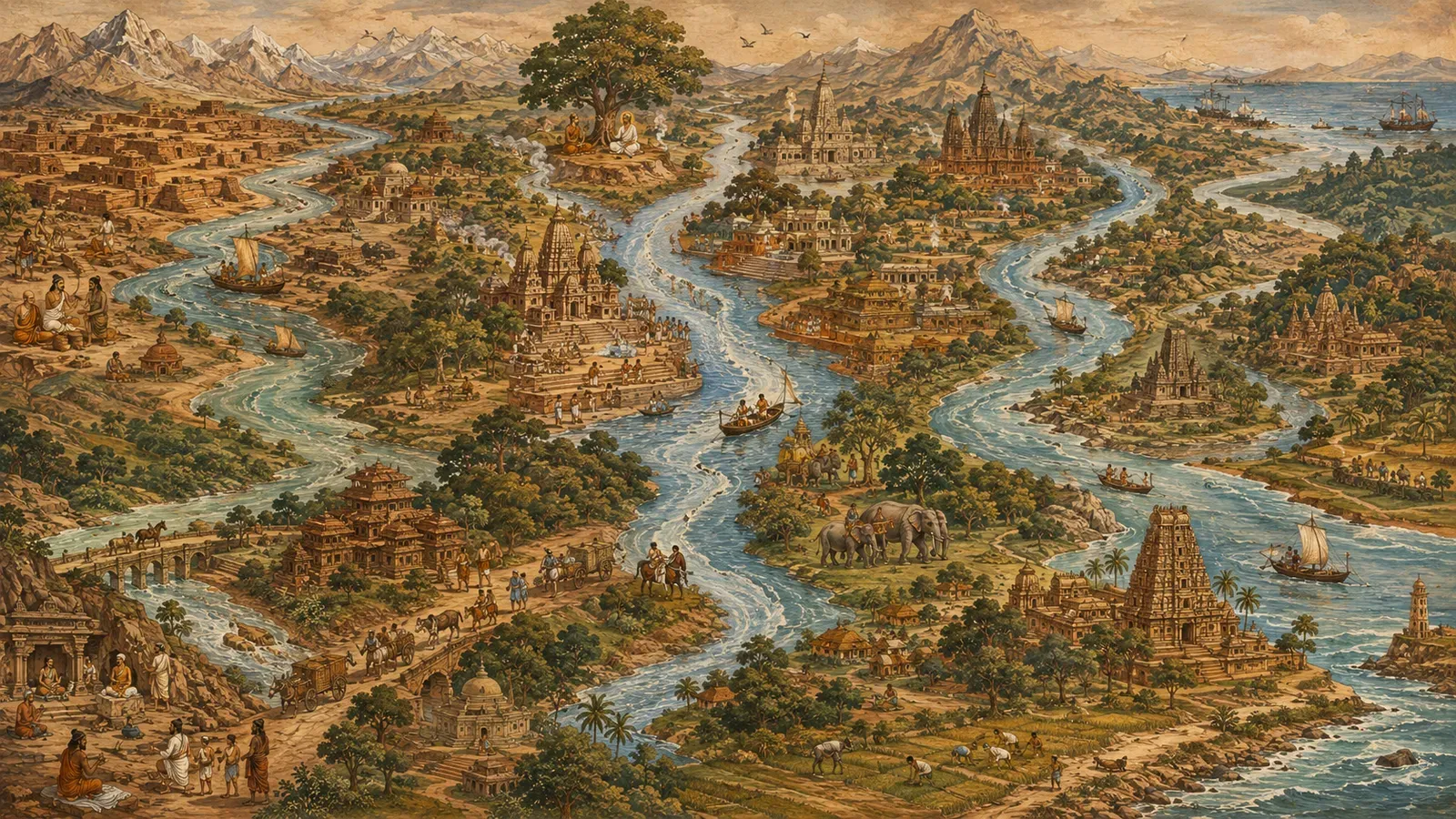
शास्त्रीय भूगोल में भारतवर्ष भारतवर्ष
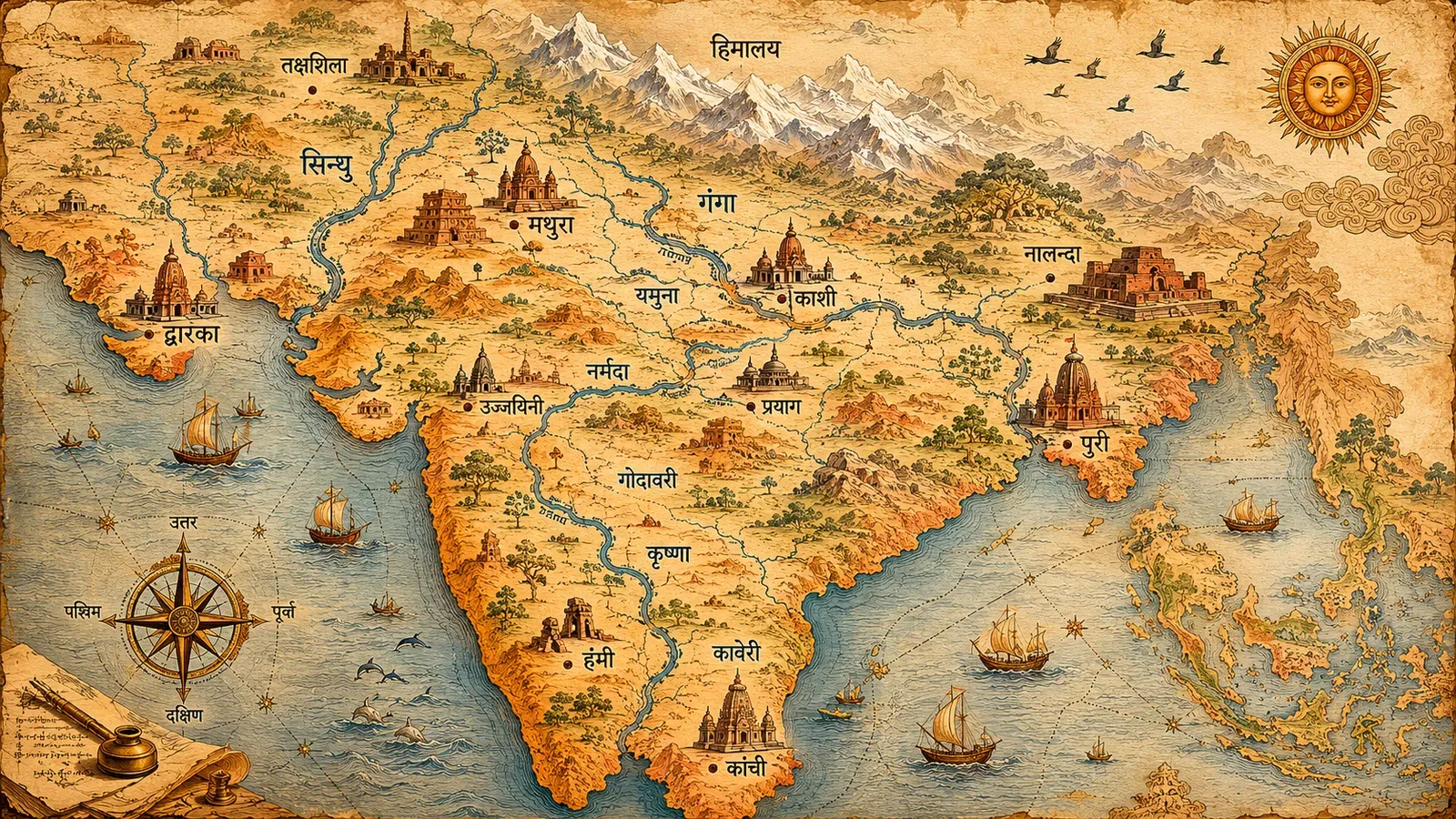
शास्त्रीय संस्कृत ग्रन्थ, विष्णुपुराण, भागवत, महाभारत का भीष्म पर्व और मनुस्मृति 2.17–24, भारतवर्ष का वर्णन किसी आधुनिक राजनीतिक राज्य के रूप में नहीं, वरन् एक सभ्यतागत इकाई के रूप में करते हैं, जिसकी सीमा उत्तर में हिमालय और दक्षिण में समुद्र है। विष्णुपुराण इसके नौ भाग बताता है।
यह आधुनिक सीमाओं के विषय में कोई कथन नहीं है। यह इस बात का वर्णन है कि परम्परा उस क्षेत्र को कैसे समझती थी, जिस पर धर्म का आचरण होता था: उत्तर-पश्चिम में गान्धार, पूर्व में वंग, दक्षिण में तमिल प्रदेश, और उससे आगे, व्यापार, विवाह और विचारों के माध्यम से, वे भूभाग जिन्हें शास्त्र सुवर्णभूमि और सुवर्णद्वीप कहते थे, अर्थात् दक्षिण-पूर्व एशिया।
मन्दिर जो स्मरण रखते हैं
एक छोटी और अधूरी सूची। कुछ में आज भी पूजा होती है; कुछ विश्व-धरोहर के खण्डहर हैं; सभी आधुनिक भारतीय राज्य की सीमाओं से बाहर भारतीय मन्दिर-परम्परा को धारण करते हैं।
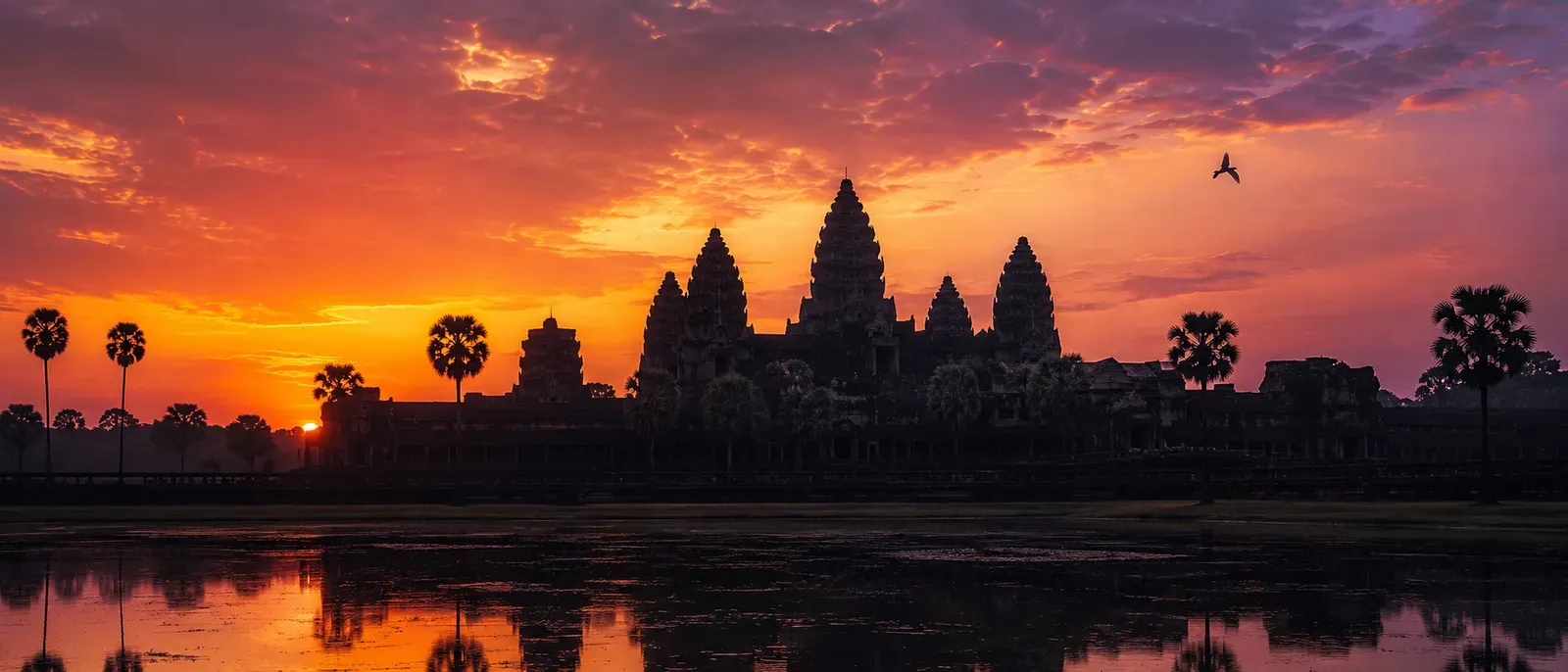
अंगकोर वाट
लगभग 1113–1150 ई.कम्बोडिया · मूलतः विष्णु, आगे चलकर बौद्ध
पृथ्वी का सबसे विशाल धार्मिक स्मारक, जिसे खमेर साम्राज्य के सूर्यवर्मन् द्वितीय ने वैष्णव मन्दिर के रूप में बनवाया।
प्रम्बनन
नौवीं शताब्दी ई.जावा, इण्डोनेशिया · ब्रह्मा · विष्णु · शिव
मध्य जावा में त्रिमूर्ति के ऊँचे हिन्दू मन्दिर, आज भी संरक्षित और दर्शनार्थियों से भरे।
पशुपतिनाथ
प्राचीन; वर्तमान रूप सत्रहवीं शताब्दीकाठमाण्डू, नेपाल · पशुपति शिव
बागमती के तट पर, पृथ्वी के सबसे पवित्र शैव तीर्थों में से एक।
मुक्तिनाथ
प्राचीनमुस्तांग, नेपाल · विष्णु (108 दिव्य देशों में से एक)
लगभग 3,700 मीटर की ऊँचाई पर वैष्णव तीर्थ, हिन्दुओं और बौद्धों दोनों के लिए पवित्र।
हिंगलाज माता
प्राचीनबलूचिस्तान, पाकिस्तान · हिंगुला देवी, एक शक्तिपीठ
शक्तिपीठों में से एक। हिन्दुओं की वार्षिक यात्रा आज भी चलती है।
सीता अम्मन मन्दिर
प्राचीन काल से पूजित स्थलनुवारा एलिया, श्रीलंका · सीता देवी
परम्परा के अनुसार लंका में सीता जिस अशोक वाटिका में रखी गई थीं, उसके निकट।
मी सन मन्दिर-समूह
चौथी से तेरहवीं शताब्दी ई.क्वांग नाम, वियतनाम · भद्रेश्वर शिव (चम्पा)
मध्य वियतनाम में चम्पा राज्य का शैव मन्दिर-समूह, संस्कृत शिलालेखों और भारतीय मन्दिर-स्थापत्य सहित।
बन्तेय स्राय
967 ई.कम्बोडिया · शिव
गुलाबी बलुआ पत्थर में इतिहास और पुराणों के दृश्यों की अत्यन्त सूक्ष्म नक्काशी।
संस्कृत का विस्तार
इनमें से कुछ शब्द पालि और बौद्ध परम्परा के माध्यम से गए, कुछ राजसभाओं के माध्यम से, कुछ व्यापार के माध्यम से। तथ्य यही है: आज करोड़ों लोग ऐसी भाषाएँ बोलते हैं जिनमें संस्कृत रची-बसी है।
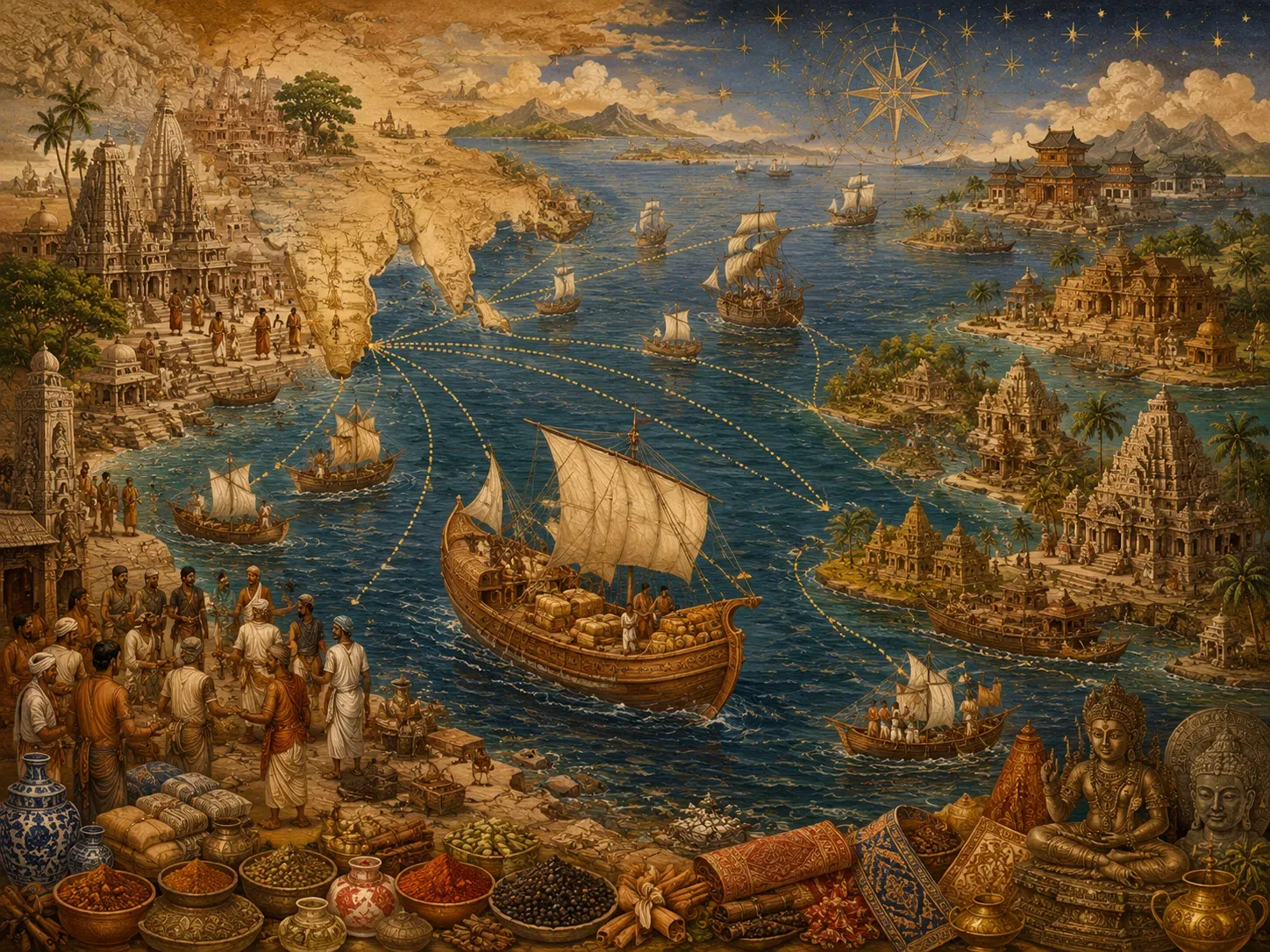
- थाई राजा → ราชา (राचा) · अग्नि → อัคนี (अक्खनी) · प्रजा → ประชา (प्रचा) · धर्म → ธรรม (थम)
- खमेर देव → तेप · राज → रीच · राजकीय प्रत्यय -वर्मन् (सूर्यवर्मन्, जयवर्मन्)
- इण्डोनेशियाई और मलय गुरु · रत्न · पुत्र · मनुसिया (मनुष्य) · नेगारा (नगर) · आगामा (आगम) · बहासा (भाषा)
- फ़िलिपीनी (तगालोग) गुरो (गुरु) · दिवा (देव, “आत्मा”) · बथाला (भट्टार)
जीवित सूत्र
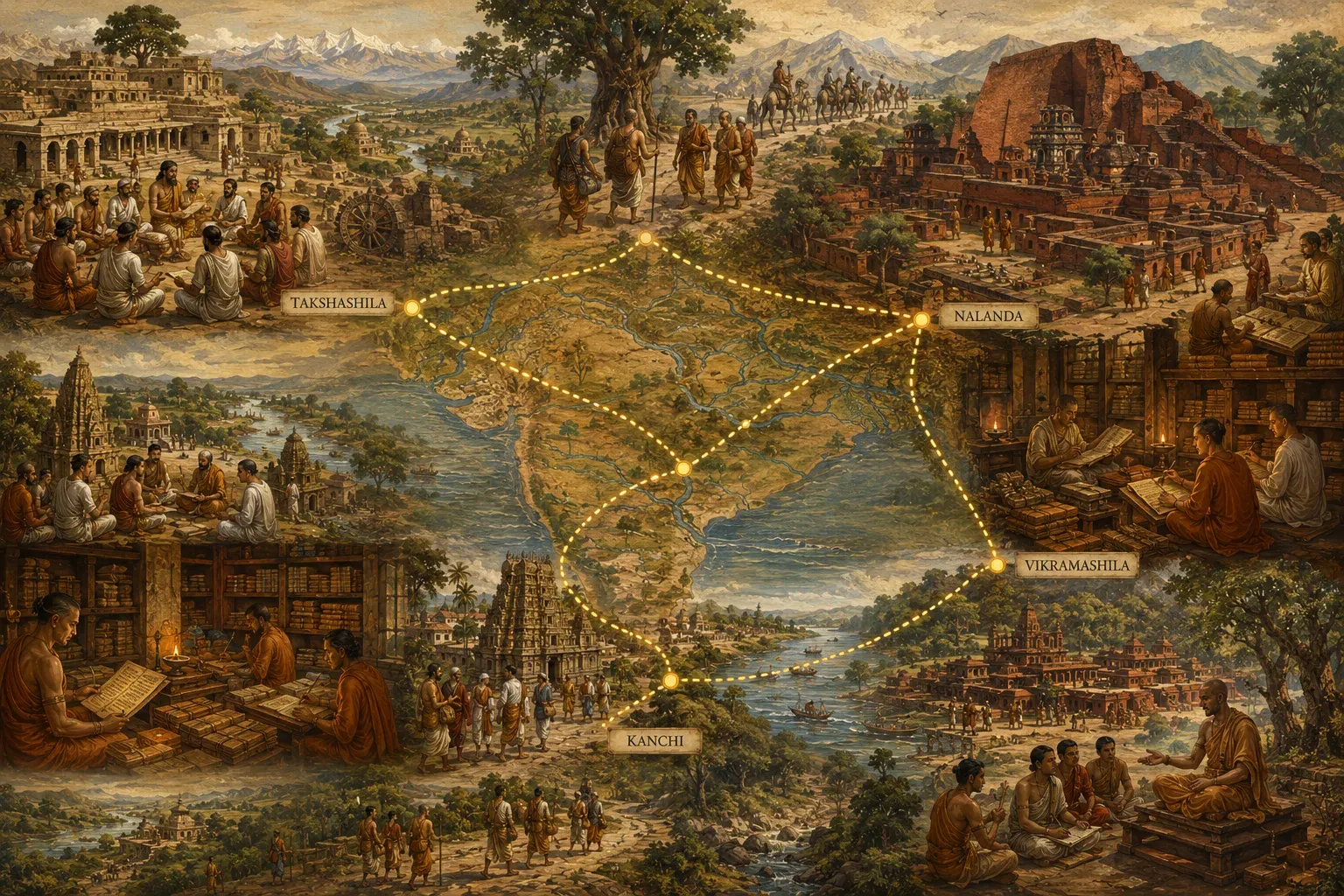
बाली में हिन्दू बहुसंख्यक आज भी न्येपी से पहले समुद्र-तट पर मेलस्ती शुद्धि-संस्कार करते हैं, जैसे उनके पूर्वज शताब्दियों से करते आए। थाईलैण्ड में वर्तमान राजवंश के राजाओं ने राज्याभिषेक पर राम नाम धारण किया है। कम्बोडिया में रीमकेर खमेर भाषा की रामायण है, जो राजकीय समारोहों में नृत्य के रूप में प्रस्तुत होती है। दक्षिण-पूर्व एशिया में अभिवादन आज भी अञ्जलि है: जुड़े हाथ, थोड़ा झुका सिर।
ये अवशेष नहीं हैं। ये निरन्तरताएँ हैं: वही सभ्यता, थोड़े भिन्न वेश में।
सम्पादकीय दृष्टि
सनातन भूमि अखण्ड भारत को वैसे ही देखता है जैसे शास्त्र देखते हैं: सभ्यता के विस्तार के वर्णन के रूप में, मानचित्र फिर से खींचने के आदेश के रूप में नहीं। दृष्टि सभ्यतागत, ऐतिहासिक और धार्मिक है। स्रोत बताए जाते हैं। कभी साम्प्रदायिक नहीं, कभी उकसाने वाली नहीं। प्रश्न है क्या था, क्या है, क्या हो सकता है, कभी यह नहीं कि किस पर आक्रमण करें। जहाँ आधुनिक इतिहास ने पुराने क्षेत्र के बीच रेखाएँ खींच दी हैं, वहाँ हम उन रेखाओं को स्वीकार करते हैं, और उस पर लिखते हैं जो उनसे पहले था और उनके पश्चात् भी टिका है।